 NextAzollaEvent
NextAzollaEvent
Turning overlooked spaces into carbon infrastructure.
A Stony Brook University research project funded by the National Science Foundation.


Swipe, tap the arrows, or use your arrow keys.
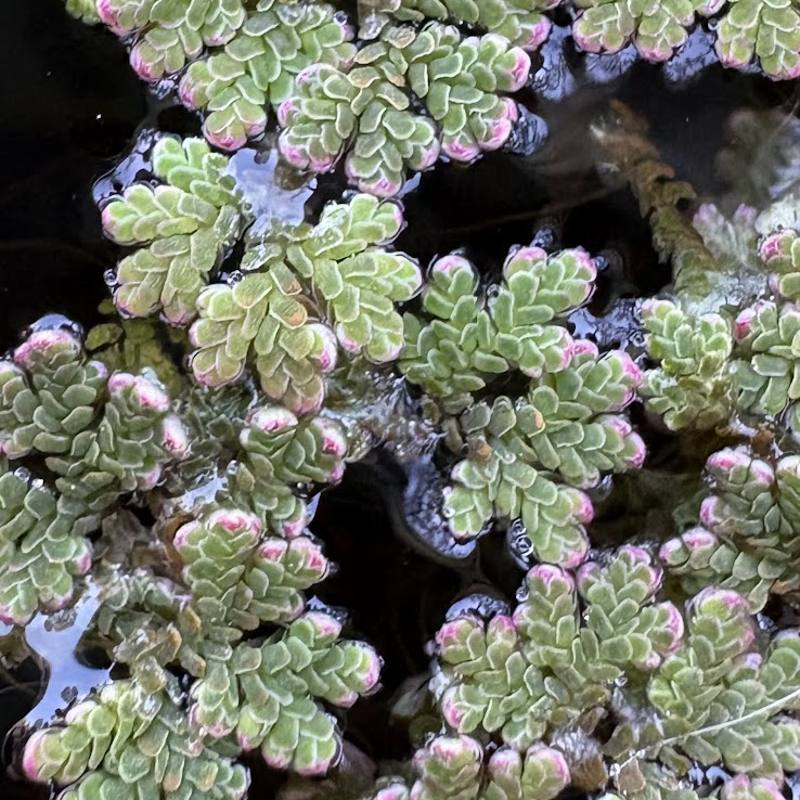
This plant cooled the world once.
About 50 million years ago, vast Azolla blooms covered a warm Arctic Ocean. Many scientists think they helped draw down carbon dioxide and cool the planet.
We're asking it to do it again.
More detail
Sediment cores drilled near the North Pole show Azolla grew across the Arctic Ocean for about 800,000 years, starting around 49 million years ago (Brinkhuis et al., 2006, Nature). Burying that much plant matter may have drawn down atmospheric CO2 substantially and contributed to long-term cooling (Speelman et al., 2009, Geobiology; see also the 2025 review by Yang et al., 2025, Frontiers in Plant Science).
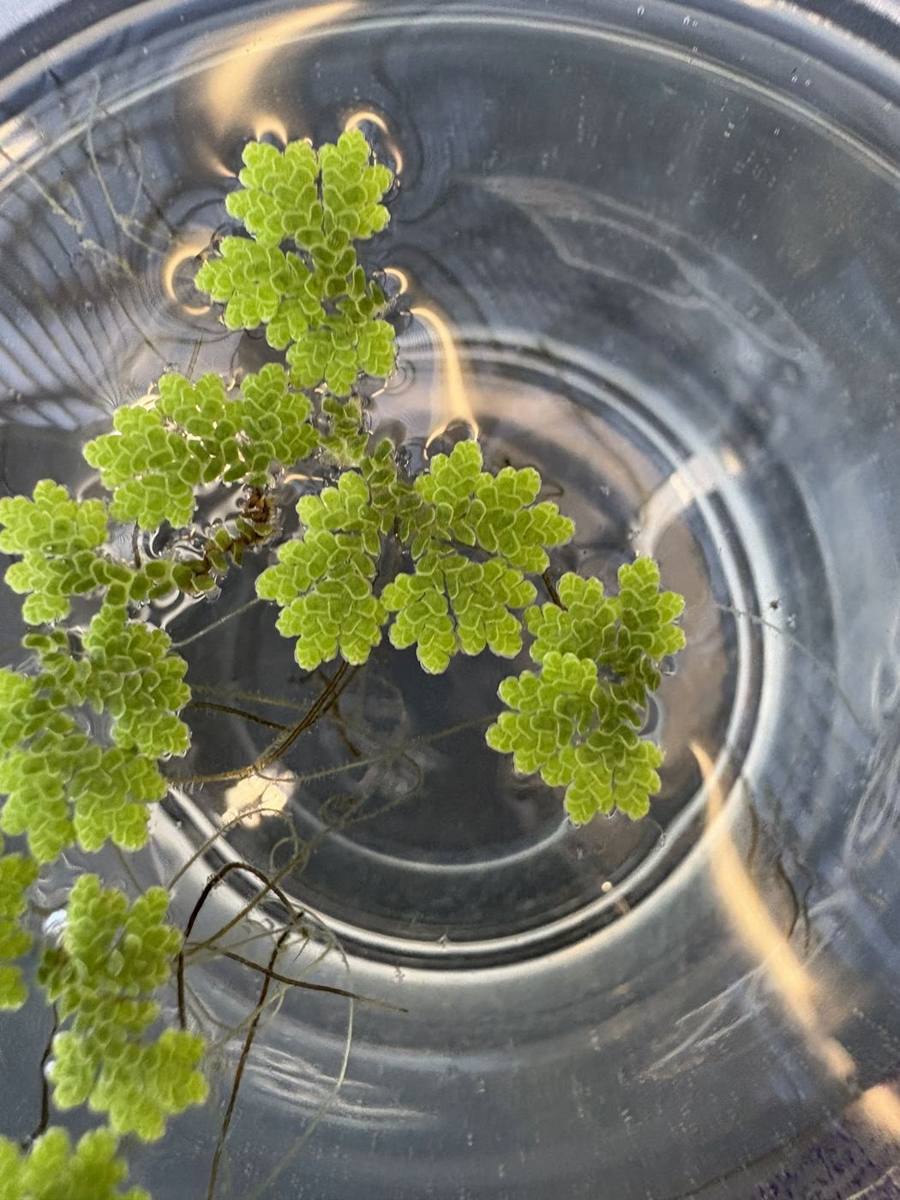
Meet Azolla
- Doubles in 2 to 5 days. One of the fastest-growing plants on Earth.
- About 40% carbon when dried, all drawn from the air.
- Makes its own nitrogen fertilizer.
More detail
Azolla is a small floating fern. Cyanobacteria living inside its leaves fix nitrogen from the air, so it needs no nitrogen fertilizer. Phosphorus is what limits its growth, which is why it's a focus of our research.
-
Air
Excess carbon dioxide warms the atmosphere.
-
Grow
Azolla pulls in CO2 and turns it into plant matter.
-
Harvest
We harvest Azolla at peak growth, by hand for now and soon by robot.
-
Dry and store
Harvested Azolla dries into a light, sponge-like mass without energy-intensive processing.
-
Into soil
Carbon moves into soil, where it may also help plants grow.
How it works
Small ponds grow Azolla. We harvest it at peak growth, by hand for now and soon by robot. The harvested plant dries into a carbon-rich mass or goes into soil.
More detail
Azolla grows fastest after a pond gets crowded. Removing part of the mat on a regular schedule keeps it in that fast phase. Our ARC (Azolla for Reducing Carbon) model is designed to set that harvest timing.
A robot to do the harvesting
Our prototype is designed to harvest Azolla automatically and report data to an online dashboard.
More detail
The goal is a pond that runs itself: sensing growth, harvesting at the right time, and logging how much carbon each harvest removes, similar to how a solar panel system tracks the energy it produces.
Growing more with less
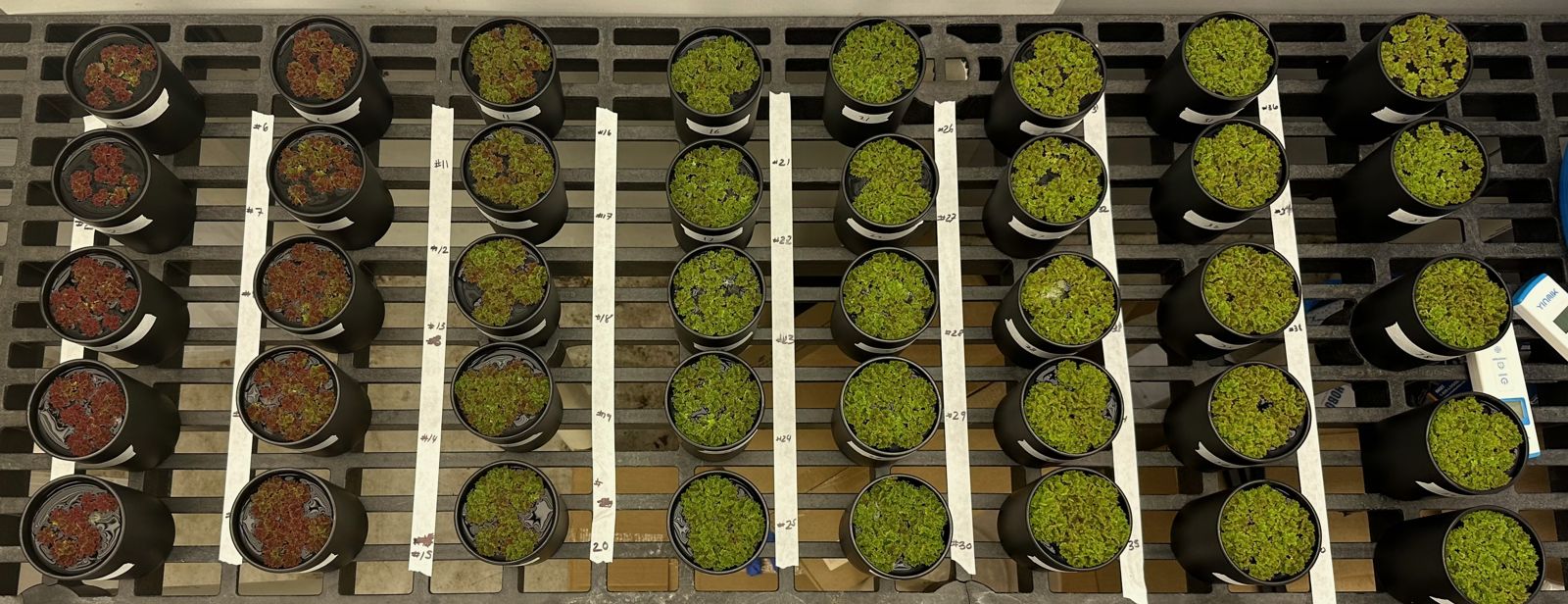
Plants need phosphorus, and farms need it too. We're finding how little phosphorus Azolla needs while still growing fast, so carbon capture doesn't compete with food.
More detail
This photo shows Azolla after two weeks at eight phosphorus levels, from 0.25 to 40 parts per million. Fronds shift from thin and red to thick and green as phosphorus increases.
Our NSF research asks three questions:
- How little phosphorus can Azolla use while maximizing growth?
- How long does carbon stay in soil when Azolla is added on its own, as compost, or as a biogel?
- How do those soil additions affect plants, earthworms, and soil microbes?
Where we are now
- Before 2025 Students run early Azolla experiments in course-based research
- 2025 $450,052 National Science Foundation award, 2025 to 2027
- 2025 Outdoor study begins tracking how long harvested carbon lasts
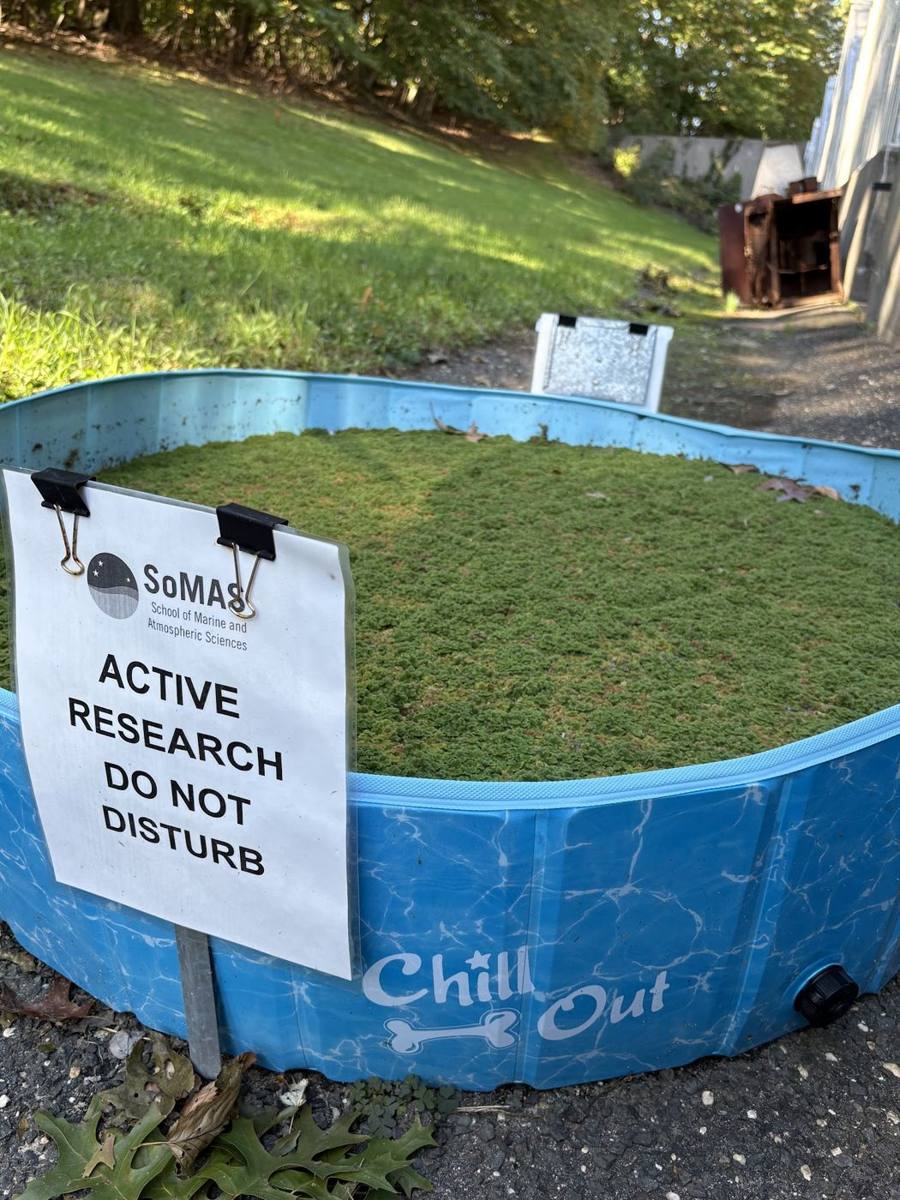
- 2026 Pilot pond outside the Life Sciences Building on campus; robotic harvester prototype and online dashboard in development
- Next Measurement methods strong enough to support independently verified carbon removal
More detail
NSF award CBET #2526429, "Azolla as a Soil Amendment to Facilitate Carbon Sequestration." Pilot ponds are also growing at residential sites.
The team
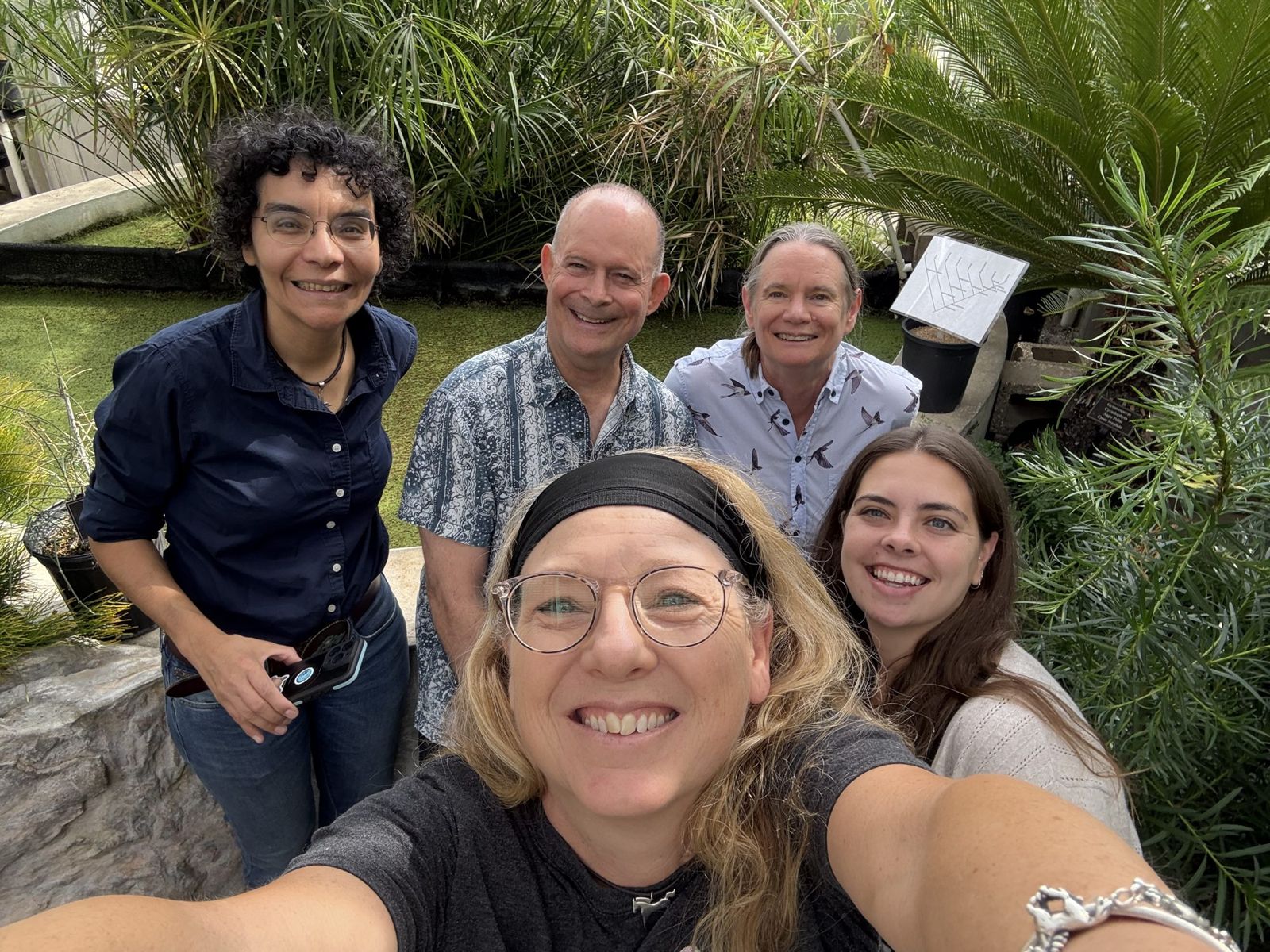
- Sharon Pochron Project lead, greenhouse experiments
- Darci Swenson Perger Postdoc, growth and phosphorus trials
- Jim Hoffmann, Ph.D. Modeling and systems
- Jackie Collier Microbial ecology and water
- Liliana Dávalos Genetics and statistics

Help us grow
- Host a pond on an unused rooftop, lot, or yard.
- Join the research as a researcher, student, or company.