 NextAzollaEvent
This plant cooled the world once. We're asking it to do it again.
About 50 million years ago, vast Azolla blooms covered parts of a warm Arctic Ocean. Many scientists think these blooms helped draw down atmospheric carbon dioxide and contributed to the planet's long-term cooling.
Sources: Brinkhuis et al., 2006, Nature, the original discovery; Speelman et al., 2009, Geobiology, on carbon drawdown; and a 2025 review, Yang et al., 2025, Frontiers in Plant Science.
A small plant with a big appetite
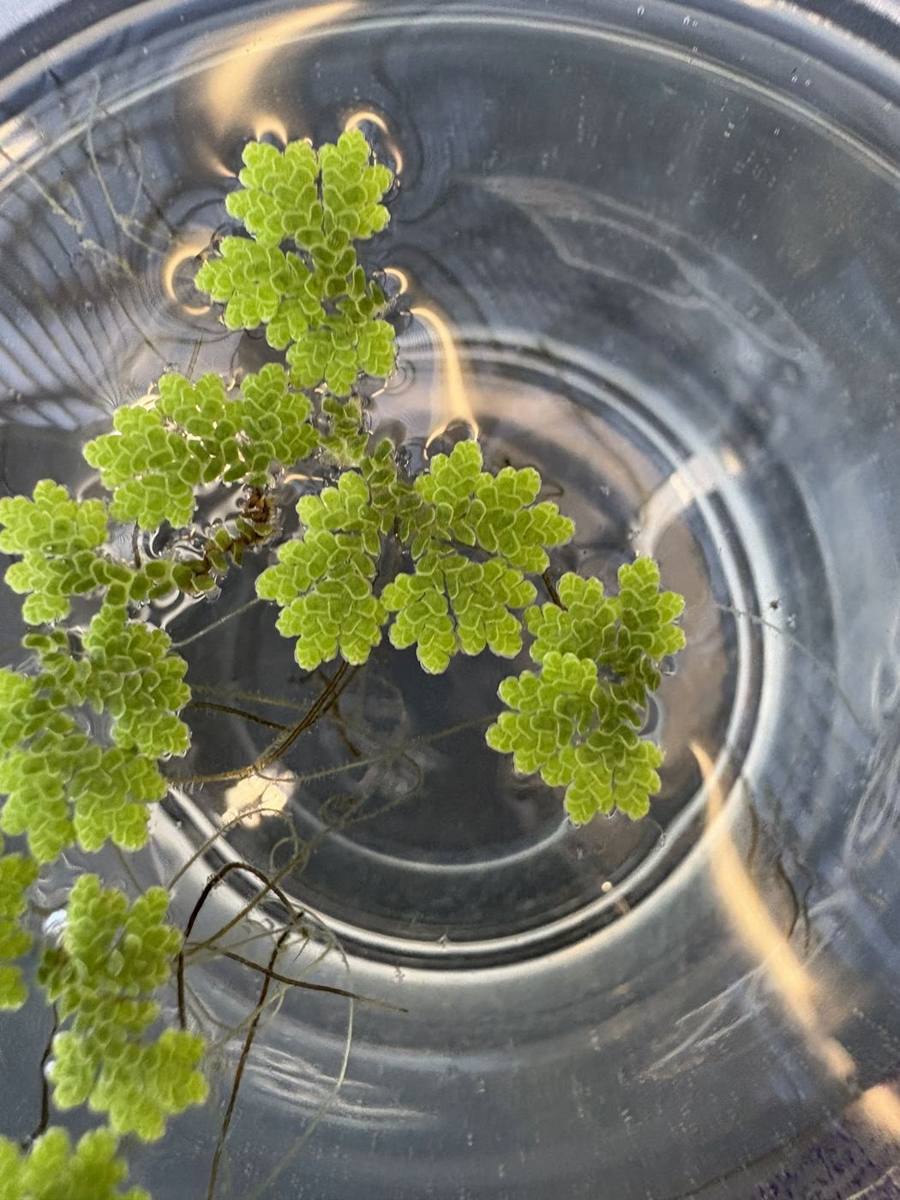
- Fast growing. Under good conditions, Azolla can double its mass in 2 to 5 days (Yang et al., 2025).
- Carbon rich. Dried Azolla is about 40% carbon, drawn from the air.
- Makes its own fertilizer. A partnership with cyanobacteria lets Azolla pull nitrogen from the air, so it needs no nitrogen fertilizer.
How it works
Small ponds grow Azolla. We harvest it at peak growth, then store the carbon-rich plant as a dry mass or in soil.
-
Air
Excess carbon dioxide warms the atmosphere.
-
Grow
Azolla pulls in CO2 and turns it into plant matter.
-
Harvest
We harvest Azolla at peak growth, by hand for now and soon by robot.
-
Dry and store
Harvested Azolla dries into a light, sponge-like mass without energy-intensive processing.
-
Into soil
Carbon moves into soil, where it may also help plants grow.
Why harvest timing matters
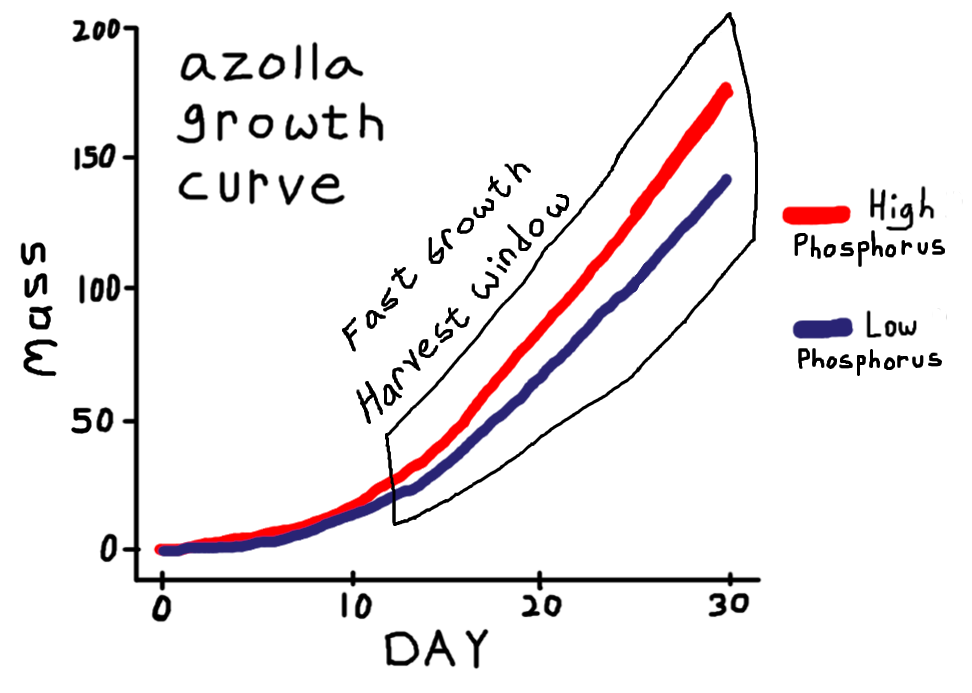
Azolla grows fastest after the pond gets crowded. Our research models this growth so we can harvest at the right moment and keep the plants in their most productive phase. We're developing an automated harvester designed to make these decisions on its own.
We're also building an online dashboard. It will estimate how much carbon is stored from the amount of Azolla harvested, so you can see how much carbon you're storing.
What we're studying
Our National Science Foundation research asks three questions.
How little phosphorus can it use?
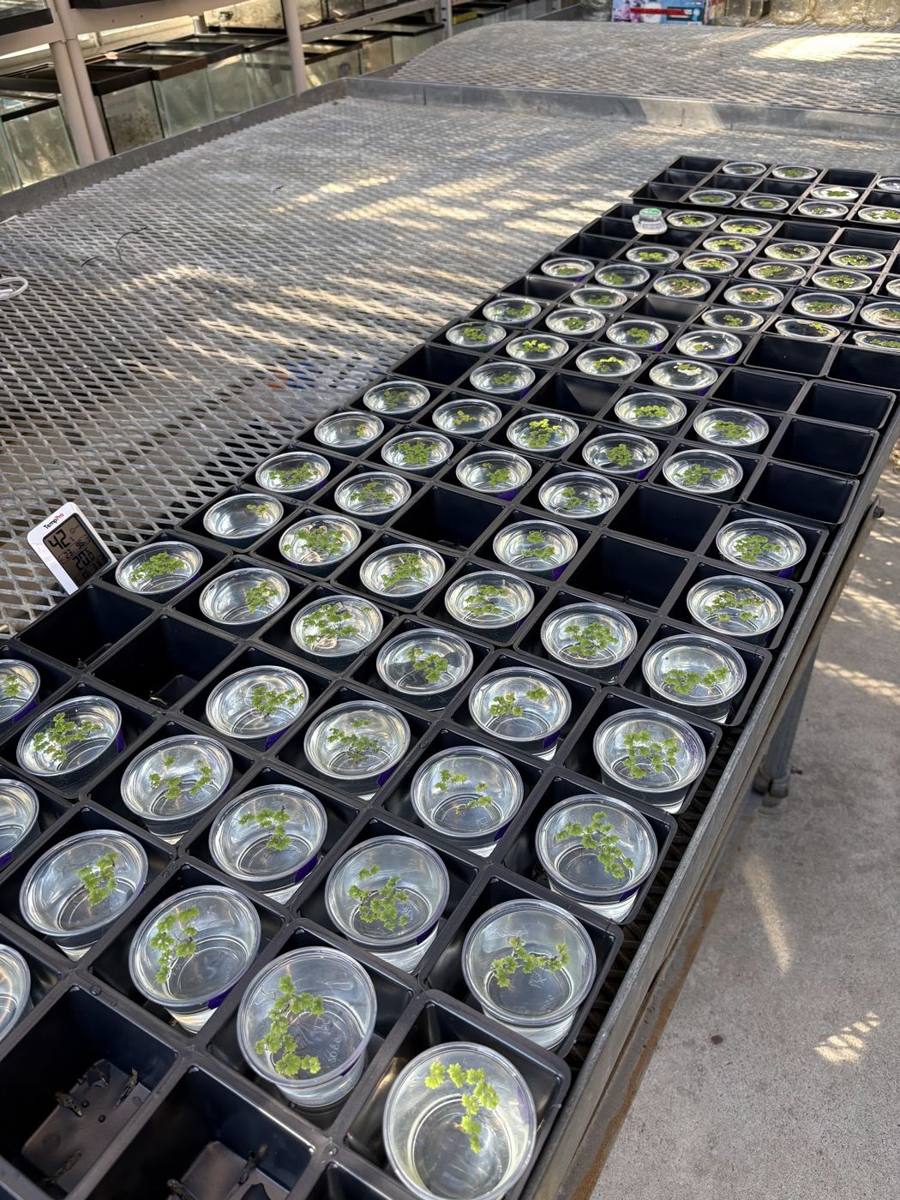
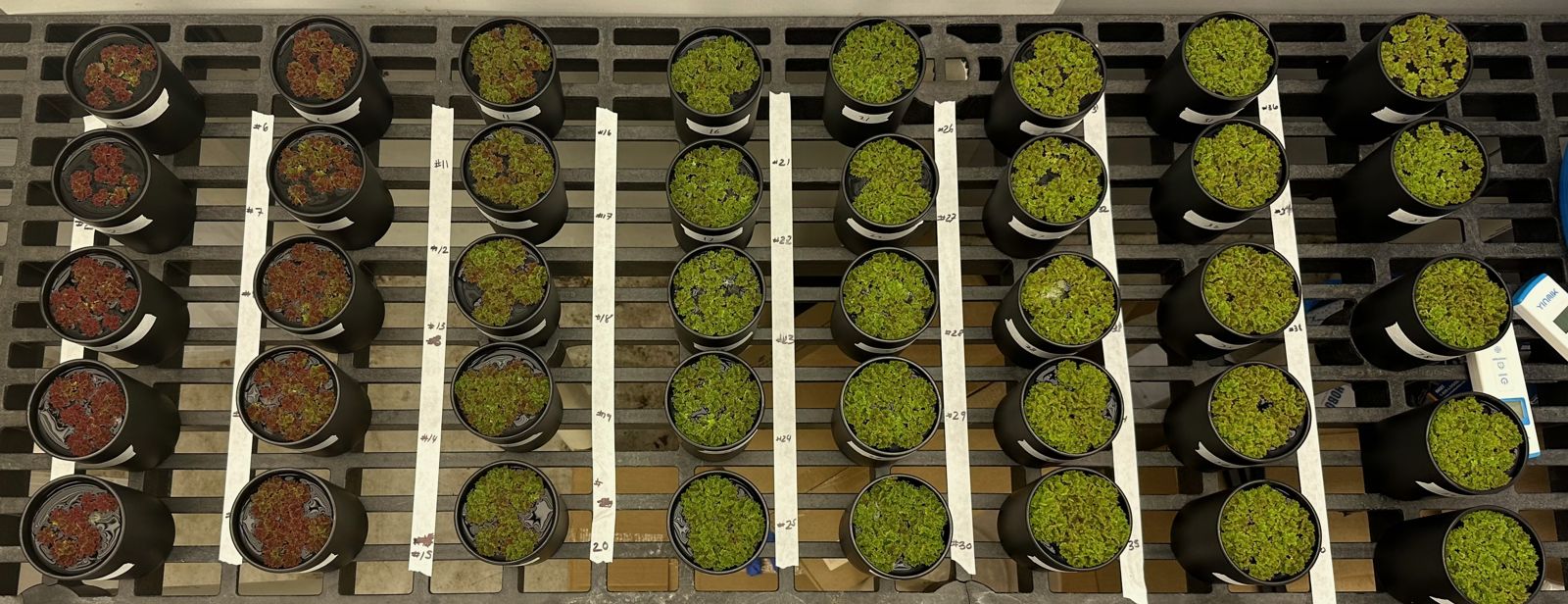
Plants need phosphorus, and farms need it too. We grow Azolla at different phosphorus levels to find the balance that produces the most plant, and the most captured carbon, with the least fertilizer, so carbon capture doesn't compete with food production.
How long does the carbon stay?
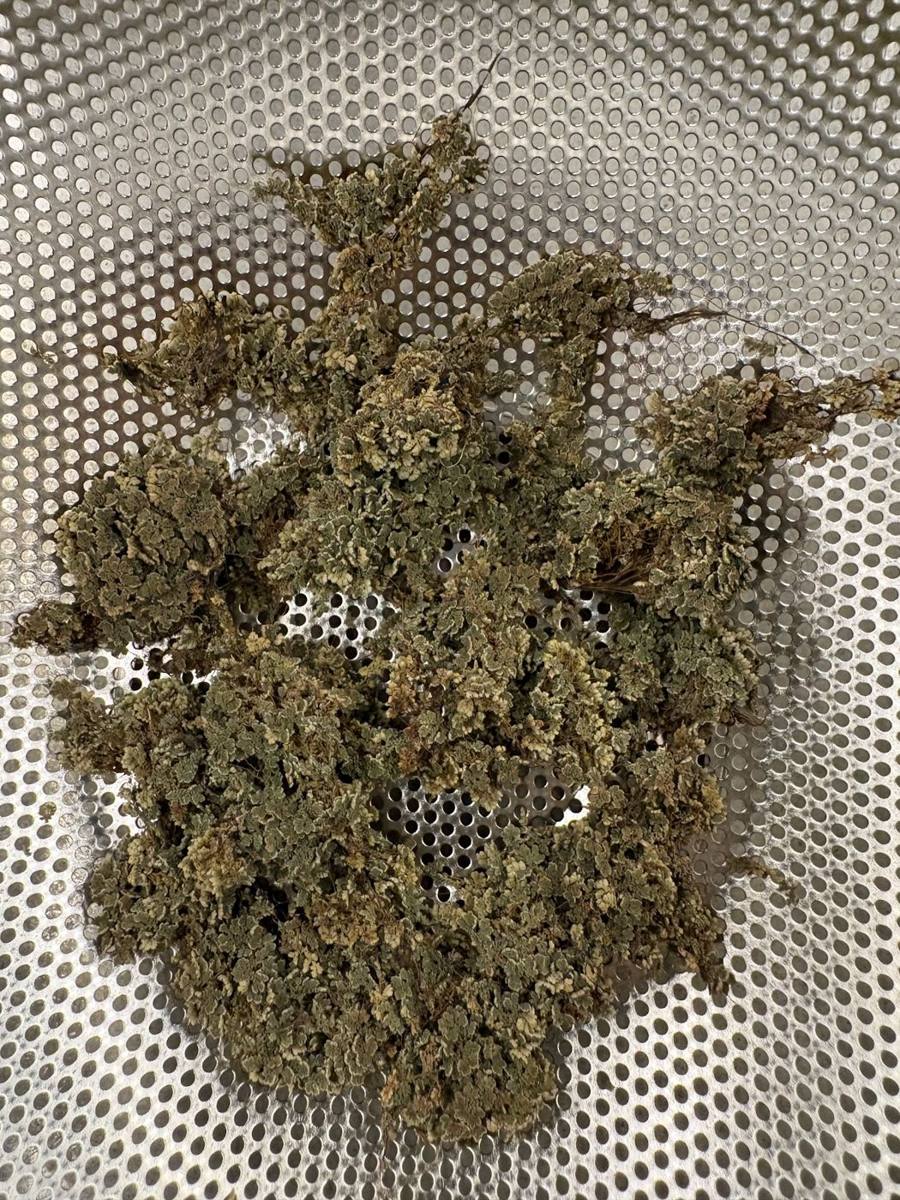
Once harvested and dried, Azolla becomes a lightweight, sponge-like material that can store carbon without energy-intensive processing. It can be added directly to soil, turned into compost, or developed into a new biogel. How long the carbon remains depends on how the Azolla is used: it may break down within months in soil, while other forms could hold carbon for years or even decades.
We're testing these possibilities through outdoor experiments, including a study launched in 2025 that tracks how dried Azolla breaks down over time. Our soil research also contributes to the international 4 per 1000 Initiative, which promotes increasing carbon stored in soils.
Is it good for soil?
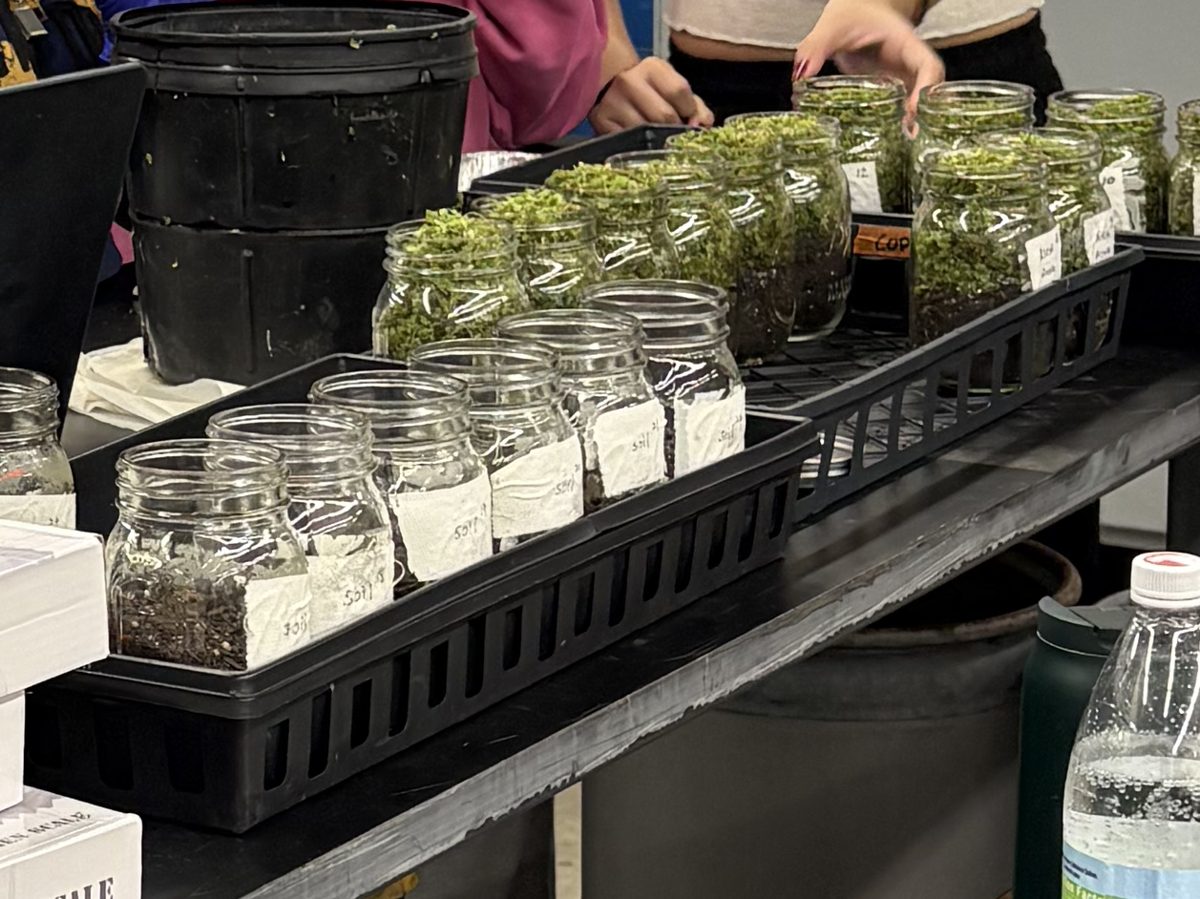
We measure how Azolla soil additions affect plants, earthworms, and soil microbes.
The results feed the ARC (Azolla for Reducing Carbon) model, which predicts how much carbon the system can capture and store.
Common questions
Is Azolla invasive?
Some Azolla species have spread outside their native ranges, so we take containment seriously. We grow Azolla only in closed, above-ground ponds and tanks that aren't connected to streams, lakes, or storm drains. The Azolla in our Long Island ponds was collected from the Peconic River. Azolla grows on every continent except Antarctica, and as we expand we'll use Azolla native to each region.
Will a pond attract mosquitoes?
Azolla is sometimes called mosquito fern because a thick mat covering the water is thought to make it harder for mosquitoes to breed. Our ponds are kept fully covered with Azolla and checked regularly. We also add a Bti tablet, a natural bacterium that targets mosquito larvae, every 2.5 months.
How much carbon can one pond capture?
That's exactly what our pilot ponds are measuring. Growth depends on sunlight, temperature, and nutrients, so we'd rather share real measurements than a best-case estimate.
Why not just plant trees?
We see Azolla as a partner to trees, not a replacement. Trees take decades to grow and need open land. Azolla can double in 2 to 5 days, can be harvested every few days, and grows in small ponds on rooftops, parking lots, and other spaces that can't hold a forest.
Does it need fertilizer?
Azolla makes its own nitrogen fertilizer through a partnership with cyanobacteria, which keeps fertilizer costs down over time. We supplement with a low-cost fertilizer that provides phosphorus and other nutrients, and a major part of our research is finding how little phosphorus it can use while still growing quickly.
What happens in winter?
Outdoor growth slows in cold weather. Part of our research is measuring how ponds perform through the seasons. We also grow Azolla year-round in the greenhouse.
Can my company buy carbon credits from this?
Not yet. Carbon credits require independent verification and carbon that stays stored for a very long time, often 100 years or more. A goal of our five-year plan is to build measurement methods strong enough to support verified carbon removal. Companies interested in piloting the system can reach out through our contact page.
What does hosting a pond involve?
A sunny, level spot for a small above-ground pond and access to water.
We're still early. Every site so far is run by our team, and our methods are changing as we learn. We'd love to hear from local community members who want to host or help. Just know you'd be exploring alongside us, not getting a finished, hands-off system. Cost and setup depend on the site, so reach out and we'll talk it through.